
Wednesday, 11 June 2014

Wednesday, 4 June 2014
Monday, 19 May 2014
Exercise 2B
Production schedule still to be uploaded. My blogger is having technical difficulties.
A beat is a piece of terminology that is commonly used within the world of music. It is used to measure the pace in which a piece of music is being played and composed, setting how it being played.
 I have used the name ‘The Beat’ for my show
as not only is it just two syllables and rolls off the tongue, but it also is
musically related, allowing people to assume that it has been chosen for a
specific reason. It also sounds good in different sentences. For example,
I have used the name ‘The Beat’ for my show
as not only is it just two syllables and rolls off the tongue, but it also is
musically related, allowing people to assume that it has been chosen for a
specific reason. It also sounds good in different sentences. For example,
The logo I have chosen for the TV show that I am creating is bright and spunky, the colours definitely stand out against the white I am thinking of using the logo as the background as well, but with the paint actually splattering against the wall throughout the show.
 In the middle of them both, I would want
there to be a small, round, wooden table that has a few drinks on there. I got
this inspiration from ‘Alan Carr Chatty Man’ in which he always offers his
guests a drink, which always loosens the atmosphere and lets go of any nervous
tension that the guests may have, especially if this is one of their first
shows in a long time. Therefore I would like to apply the same knowledge, as
most guests will probably be anxious. Also, the green screen behind will carry
the background, which, again, will be the logo and paint splattering, the
different shades of blue paint continuously being splattered onto the white
background throughout the interview.
In the middle of them both, I would want
there to be a small, round, wooden table that has a few drinks on there. I got
this inspiration from ‘Alan Carr Chatty Man’ in which he always offers his
guests a drink, which always loosens the atmosphere and lets go of any nervous
tension that the guests may have, especially if this is one of their first
shows in a long time. Therefore I would like to apply the same knowledge, as
most guests will probably be anxious. Also, the green screen behind will carry
the background, which, again, will be the logo and paint splattering, the
different shades of blue paint continuously being splattered onto the white
background throughout the interview.
 This is a feature in which the guests are
asked on three singers each, if they would date them or not. It is another quick
fire feature, therefore the appropriate answers are ‘yah’ or ‘nah’. Also, both
of those words are quite common in today’s social media, therefore it can
appeal to the audience, who are roughly aged between 14-20.
This is a feature in which the guests are
asked on three singers each, if they would date them or not. It is another quick
fire feature, therefore the appropriate answers are ‘yah’ or ‘nah’. Also, both
of those words are quite common in today’s social media, therefore it can
appeal to the audience, who are roughly aged between 14-20.
 I
believe that it is all too easy to cast the wrong people in the job of
presenting. For example, if the presenters are awkward and stiff, the whole
programme becomes awkward and stiff. Therefore, I would like the presenters to
be as loose and genuine as humanely possible, but also without being faked.
They should have witty banter between themselves and also make sure that the
guests are equally as involved, because if the guest feels involved then the
audience is probably likely to feel involved as well. If one of the presenters
makes a joke, I would expect the other one to bounce off that joke and perhaps
keep it a running theme. Also, I find it very excitable to view magazine shows
in which the cast and crew can be heard laughing as well, as it makes the whole
show a lot more comfortable and chilled.
I
believe that it is all too easy to cast the wrong people in the job of
presenting. For example, if the presenters are awkward and stiff, the whole
programme becomes awkward and stiff. Therefore, I would like the presenters to
be as loose and genuine as humanely possible, but also without being faked.
They should have witty banter between themselves and also make sure that the
guests are equally as involved, because if the guest feels involved then the
audience is probably likely to feel involved as well. If one of the presenters
makes a joke, I would expect the other one to bounce off that joke and perhaps
keep it a running theme. Also, I find it very excitable to view magazine shows
in which the cast and crew can be heard laughing as well, as it makes the whole
show a lot more comfortable and chilled.
SHOW SCHEDULE
 6:30 – ‘The Beat’ comes on the screen and
the VT clip is shown on what we have coming up on the show and this includes
many small clips of the music videos. This lasts for one minute. Then this
fades to two empty chairs.
6:30 – ‘The Beat’ comes on the screen and
the VT clip is shown on what we have coming up on the show and this includes
many small clips of the music videos. This lasts for one minute. Then this
fades to two empty chairs.
 6:33 – Just like ‘Alan Carr Chatty Man’,
the guest would walk out to music and may even do a little dance before
greeting both of the interviewers and sitting in the chair opposite. The
interviewers suggest that they have a drink of some sort - Ribena, Coke, etc.
6:33 – Just like ‘Alan Carr Chatty Man’,
the guest would walk out to music and may even do a little dance before
greeting both of the interviewers and sitting in the chair opposite. The
interviewers suggest that they have a drink of some sort - Ribena, Coke, etc.
 6:46 – The second guest appears however
they launch straight into the games, after the same introduction as the first
guest.
6:46 – The second guest appears however
they launch straight into the games, after the same introduction as the first
guest.
6:49 – “And the Lyric is…” This is the feature when the guest is given three lyrics in words and they have to sing it back to the interviewer. Everytime they get the lyric right, they get a chocolate bar.
Title of the show:
‘The Beat’
A beat is a piece of terminology that is commonly used within the world of music. It is used to measure the pace in which a piece of music is being played and composed, setting how it being played.
I have used the name ‘The Beat’ for my show
as not only is it just two syllables and rolls off the tongue, but it also is
musically related, allowing people to assume that it has been chosen for a
specific reason. It also sounds good in different sentences. For example,
“Did you see Chris Brown on The Beat last
night?”
“Apparently, Drake is on The Beat next
week!”
“It’s straight home to do some work for me,
then I’ll probably watch The Beat and see who’s on that tonight!”
The logo I have chosen for the TV show that I am creating is bright and spunky, the colours definitely stand out against the white I am thinking of using the logo as the background as well, but with the paint actually splattering against the wall throughout the show.
SET LAYOUT
Personally,
I believe that if the set is too fixed, it can make the show look quite stiff
and forced. By ‘too fixed’ I mean the chairs are placed in exact positions and
therefore look slightly uncomfortable to sit on. Amazingly, this also has an
impact on the viewer, if the interviewer looks uncomfortable, this reflects
onto the viewer and how they feel. For my show, I think that blue sofa seats
would be adequate, as they are rather comfortable and therefore carries a
relaxed tone alongside it. Two chairs would work well, one for each presenter,
and then one longer chair opposite them for the guests to comfortably sit in.
CONTENT IDEAS
I have range of ideas that I would like to
use in terms of both opinion and trivia. These include:
Opinion
“Who wore it best?”
This is when the guests are shown two
pictures of two different singers wearing the same outfits and they must judge
in the space of five seconds who wore it best. For the viewer, both of these
pictures will be shown in a cutaway shot and therefore, only the guest’s voice
and opinion can be heard.
“Yah or nah?”
This is a feature in which the guests are
asked on three singers each, if they would date them or not. It is another quick
fire feature, therefore the appropriate answers are ‘yah’ or ‘nah’. Also, both
of those words are quite common in today’s social media, therefore it can
appeal to the audience, who are roughly aged between 14-20.
TRIVIA
“Who the hell tweeted that?”
A range of stupid tweets from the social
networking site of ‘Twitter’ are sent in and the guests have to decide who
tweeted it, from a range of three accounts. They say the word ‘BEAT’ if they
know the answer and whoever says it the quickest is allowed to answer.
Obviously, if the answer is correct, they get the point.
“Finish the lyric…”
Just for the fun of it, they are given a
range of different lyrics, but not only do they have get the lyric correct but
they also have to sing it back to the interviewer in a tune that is at least
similar to the actual song.
PRESENTERS
I
believe that it is all too easy to cast the wrong people in the job of
presenting. For example, if the presenters are awkward and stiff, the whole
programme becomes awkward and stiff. Therefore, I would like the presenters to
be as loose and genuine as humanely possible, but also without being faked.
They should have witty banter between themselves and also make sure that the
guests are equally as involved, because if the guest feels involved then the
audience is probably likely to feel involved as well. If one of the presenters
makes a joke, I would expect the other one to bounce off that joke and perhaps
keep it a running theme. Also, I find it very excitable to view magazine shows
in which the cast and crew can be heard laughing as well, as it makes the whole
show a lot more comfortable and chilled.SHOW SCHEDULE
Schedule
6:30 – ‘The Beat’ comes on the screen and
the VT clip is shown on what we have coming up on the show and this includes
many small clips of the music videos. This lasts for one minute. Then this
fades to two empty chairs.
6:31 – Both of the presenters run into the
chairs and quickly slam themselves into them, then introducing the show. The banter between them should be
rather witty, such as one presenter exclaiming that her chair was too hard and
she needed a pillow behind her, one of the crew then chucking a pillow. They
explain what’s happening in the show today in slightly more detail than the VT
clip.
6:32 – The first guest comes on. Before
this, the presenters introduce them and a VT clip is played of their ‘past work’.
This could be bloopers of them filming or little clips of them doing other
work, which should last around 20 seconds. When this is over, they cut back to
the interview and the guest walks out.
6:33 – Just like ‘Alan Carr Chatty Man’,
the guest would walk out to music and may even do a little dance before
greeting both of the interviewers and sitting in the chair opposite. The
interviewers suggest that they have a drink of some sort - Ribena, Coke, etc.
6:34 – 6:37 – The interview begins and its supposedly
a very comfortable tone. Nothing is awkward and everything is relaxed.
Questions such as ‘How was it filming in such a tight schedule?’ and ‘What do
you want to achieve this year?’ and ‘How did the fans react to the video when
it first came out?’
6:38 – Now, it’s ‘Awkward O’Clock’. This is
a feature that lasts one minute in which viewers tweet the show with questions
that could be slightly awkward. There is a countdown on the green screen so the
guests can see exactly how long they have left. The interviewers would make
this less of an awkward experience and more humorous. Questions such as ‘Who
are you dating right now?’ and ‘Are the rumours about so and so true?’ and ‘Which
singers would you hate to collab with?’
6:39 – The first music video is shown (one
minute and thirty seconds)
6:41 – ‘Who wore it best’. The first
opinion feature happens. Three outfit clashes are given and the guest states
who they prefer.
6:43 – ‘Who the hell tweeted that?’ The
first trivia feature happens. Again, three tweets are given out and the guest
has to guess who tweeted it. The tweets would be rather bizarre and strange.
6:45 – The first guest goes and the second
music video is shown. (one minute thirty seconds)
6:46 – The second guest appears however
they launch straight into the games, after the same introduction as the first
guest.
6:48 – “Yah or Nah?” They are given a
choice of five singers (depending on if the guest is male or female would then
determine which singers they choose) It’s a quick-fire feature which would last
no more than one minute.
6:49 – “And the Lyric is…” This is the feature when the guest is given three lyrics in words and they have to sing it back to the interviewer. Everytime they get the lyric right, they get a chocolate bar.
6:51 – ‘Made Up News’… In this feature, the
presenters put on fake glasses and they talk about spoof headlines that are a
play on the most topical headlines in the world of showbiz today. It is meant to be humorous and the crew should
be heard laughing in the background, encouraging the viewer to do the same.
6:53 – The last music video is shown (the
same length of time as the others.)
6:55 – Then its time for the viewer to be
involved. They are able to tweet in what rate out of ten they would give the
guests and depending on the average rate, they place a Velcro sticker
containing the guest’s head in a certain position on the ‘Beat-O-Metre’,
therefore able to compare it to the other guests.
6:58 – A VT clip is then shown on what is
on next week before it cuts back to the presenters who are now getting ready to
go, before they bid them goodbye and then stand up and the lights dim as they
begin to actually leave the building.
Friday, 2 May 2014


Wednesday, 30 April 2014
Multi-camera Job Roles
Multi-Camera Job Roles
Absolutely everybody involved in Multi-Camera jobs must have certain duties, most of which are similar to each other. For example, they must come to the set and the rehearsals every time that they are set - this is essential, especially the rehearsals, to make sure that the live showings go well. However, there are skills that the crew need, which are specifically tailored to their jobs allocated. Within the crew, there is a hierarchy that they follow, placing all of the crew in certain areas.
Camera Operator
 Camera operators are responsible for ensuring that everything that is being sent out on the television is adequately caught on camera. Without the camera operator, the programme would technically not be able to function.
- Having a knowledge of specific camera lenses for different shots is also important, due to the fact that not all shots could use the same lenses, especially if some are faraway or even closer than others. If the wrong lens is used at the wrong time, especially for live shows, not only will it be difficult to change at the time but the audience at home misses out on a huge part of whatever they are watching.
- Sometimes, the programme may be unscripted meaning that the camera operator must be able to adequately film and know the shots from memory.
- Camera operators are also in charge of filming certain shots at specific times, especially if the programme is being broadcast live. If the camera is out of shot or out of focus, it could spoil the whole programme and therefore loose ratings.
- They must have a steady hand as for when filming takes place, again, especially if it is being broadcast live. There have been a few incidents when in live shows, the camera had fallen over as the camera operator stumbled and therefore leaving the show looking untidy and unprofessional.
Case Study
In this Case Study, Brian explains the advantages and disadvantages of being a camera operator.
Advantages include:
- Shooting and filming in different locations.
- An insight in new information whilst working.
- Satisfaction when the frames are aesthetically pleasing.
Disadvantages include:
- Working in awful weather conditions.
- It's handheld most of the time.
- Caught in the traffic or any road problems.
- Having to wait around if it is an information based television show.
Sound Mixer / Audio Engineer
The sound mixer is completely in charge for the quality and main sound projected in a television show. In television, with many entertainment programmes, it is important that the levels of sound are acceptable, and more importantly, are clear. If not, the viewer looses out on most of the sound in the show, probably leading to mass amounts of complaints, not giving the show a good reputation.
 - They must ensure that the sound is being projected is audible at a suitable sound length for people to hear it.
- They must make sure that the sound is clear and not muffled or distorted in anyway unless for a specific purpose relating to the sound.
- They must be able to handle professional audio equipment whilst filming and is responsible for recording the sound needed whilst filming.
- A sufficient amount of knowledge on sound equipment and sound in media.
- An acute sense of timing for when mixing the sound live, so that sounds don't overlap and become messy.
Case Study
Some of the disadvantages and disadvantages of being a sound mixer has been listen below, taken from the Case Study above.
Advantages
- Different experiences daily.
Disadvantages
- Dealing with the clients and the directors.
- Some of the equipment is difficult to handle.
Vision Mixer
 The vision mixer is the person in charge of taking more than one video and fusing them together, most of the time whilst adding an effect. This is usually used for the more aesthetic side of a television programme. Sometimes the cuts can be hard and to the point - sometimes they can have an effect on them, depending on the structure of the show and what the vision mixer had been told to do. Particularly in live shows, there is something called a 'VT', which is a pre-recorded video tape that is shown at various points during the programme - the vision mixer is responsible for ensuring that this is sufficiently carried out.
Director (also known as a Television Director)
The director has one of the most important jobs in the whole of the crew. They are responsible for everything - whatever they say happens, absolutely must happen. There are no second thoughts when being a director, without them, the television show wouldn't run as everybody would have separate ideas and visions. They alert the crew on what they want doing and when they want it to happen, based on previous meetings discussing the show and what ultimately, whatever they believe the show should look like.
 There are many duties needed when being a director, however here I have listed just three of them.
- They must decide and supervise where everything goes. For example, the props, the lighting and sound equipment, the people involved and of course, the cameras. If anything is wrongly placed, it could aesthetically ruin the show and could be practically at fault.
There are many duties needed when being a director, however here I have listed just three of them.
- They must decide and supervise where everything goes. For example, the props, the lighting and sound equipment, the people involved and of course, the cameras. If anything is wrongly placed, it could aesthetically ruin the show and could be practically at fault.
- They are to begin the camera's rolling when they see fit, if not, running the risk of missing a cue.
- They must alert the crew in charge of mixing both audio and visual elements when they are supposed to do this, ideally at the time that they are scheduled to do it.

Set Designer
The set designer is responsible for placing where everything on the set goes. This is quite a long and laborious job in some conditions, especially if the set is quite large and there are many areas that need working on.

Lighting Desk
 Those that are in charge of the lighting desk are responsible for the lighting before and during filming. They must make sure that everything on set is visible and that the lighting levels are balanced, and they are especially important when there are moments in which a spotlight is needed or is aimed to be used.
Duties included when in charge of the lighting desk include
- Pre-Planning the lighting. There is hardly any time to improvise with the lighting since one problem could potentially ruin the whole show, therefore the person managing the lighting desk must previously plan to avoid this.
- Actually assembling the equipment needed. The equipment would be delicate and probably difficult to assemble therefore only crew members that are high in the lighting desk knowledge should entitle themselves to work with this and they are responsible for the equipment.
- Doing test shots to ensure that the lighting is sufficient enough to film.
Some of the skills needed when in charge of lighting in production include
- Being able to work in a large team of people and yet still listen to the director. Overall, it's the director's vision, therefore even though there many be many people involved in filming, they will have to make sure that they carry out the task they were given.
- However they must also be able to fairly, calmly and firmly explain their own creative vision of the lighting. Even though the director can suggest a certain way that he wanted things to be filmed, they may not have the same knowledge.
- They must have clear eye for lighting, if something is too dim they must be able to see this without it coming to the point were somebody else has to point it out for them.
Floor Manager
 One of the most important jobs whilst filming on a television set is the 'floor manager'. Without the floor manager,the presenter wouldn't know which camera to turn to at certain times and this therefore, the programme wouldn't flow as smoothly and sharply at the same time.
Duties whilst becoming a floor manager inlcude
- Making sure that all of the equipment work before filming. If it doesn't, then obviously something would go wrong and therefore fail the entire show.
- Give cues to the floor staff and the presenters as soon as it is time for them to turn to a specific camera, also making sure that they can see them.
- Quickly deal with any technical difficulties being experienced on the show, which could be either frequent or rare, nevertheless the floor manager must be ready.
Skills involved in being a floor manager include the following.
- They must be able to work quickly and under pressure. Anything that goes wrong in whilst filming would mean that the floor manager would have to deal with, therefore there is no room to panic or run out of ideas if anything were to happen live.
- They must be good at multitasking. They do not just have one job, most of them have more than one and are responsible for more than one area in the production, so they must know how to do this.
- A good, precise sense of timing. Especially whilst giving cues to the talent or the presenter, if the floor manager makes a mistake or takes to long to cue to another camera, the presenter will still follow them, leading to them looking at the wrong camera at the wrong time, therefore giving the show an unprofessional look.
Graphics Designer
 The graphics designers are responsible for any text or transitions that come on the screen during a show. This can be whilst filming live, or added in afterwards in the case of a pre-recorded show. It can even be changed after the broadcasting of a live show, an example being 'X Factor', where the numbers that are usually shown for each act are replaced with the words 'the lines are now closed', to prevent people from still calling in.
Some duties involved whilst being a graphic designer include
- They must clearly communicate with the director, asking for any specific details that they must include. Sometimes, the graphics can be the most important part of the show, therefore they must be correct.
- They are responsible for placing different graphics on certain areas of the screen whilst filming.
- They are also asked to put some areas of information on the screen when they are asked to, such as texting numbers.
Some skills that are handed when a graphics designer
- Having a sufficient amount of knowledge in graphics and how to design under pressure.
- Finding practical solutions to problems. There are some situations that a graphic designer has to deal with that can only be solved if they think rationally.
- A wide creativity and imagination. Without this, the show could look rather bland and would not be aesthetically pleasing nor memorable.
VT Operator
 The VT operator is responsible for inserting different clips and small videos into the main video rolling. Most of the time, they add the video and the video mixer then ensures that the colour and the balance is sufficient enough for this to be broadcast on television.
Duties of being a VT Operator include
- They are responsible for cutting certain clips at specific times.
- They also prepare the VT's that are needed, lining them up and queuing them so that they are shown at the right times.
- They are responsible for ensuring that the director's vision has been fulfilled and that they do not cut too early or too late.
Skills of being a VT Operator include the following
- The VT Operator must have a sharp sense of hearing. As soon as the Director wants to cut to something, the VT Operator must automatically carry out this action.
- They must be able to work quickly and effectively under pressure. Without this, the whole show could crumble.
- Finally, they must have a sensible sense of timing, impeccable in fact. There is no space in live shows for them to run a VT late, especially in the news.
Presenter
 The Presenter is responsible for showing and introducing the show. They are the entertainer in some cases, and the information-giver in other cases, such as news programmes.
Duties of being a presenter include
- They must read off the auto-cue in many situations, with a clear voice.
- Sometimes they must write and memorize their scripts, rehearsing them also before the camera rolls.
- They must research the background and have a sufficient knowledge of what they are speaking about.
Skills of being a VT Operator include the following
- A clear voice. Without this, the viewer and audience would not be able to understand or comprehend what they are saying.
- An inviting persona. Even if this was something like the news, they would have to be somewhat comfortable with the camera in front of them, otherwise they could come across uncomfortable to the viewer, leading them to turn off.
- Being able to improvise in awkward situations, as they are the only people on the television that the viewer can see and therefore must also remain calm.
By Jada Wright
DutiesAbsolutely everybody involved in Multi-Camera jobs must have certain duties, most of which are similar to each other. For example, they must come to the set and the rehearsals every time that they are set - this is essential, especially the rehearsals, to make sure that the live showings go well. However, there are skills that the crew need, which are specifically tailored to their jobs allocated. Within the crew, there is a hierarchy that they follow, placing all of the crew in certain areas.
Camera Operator
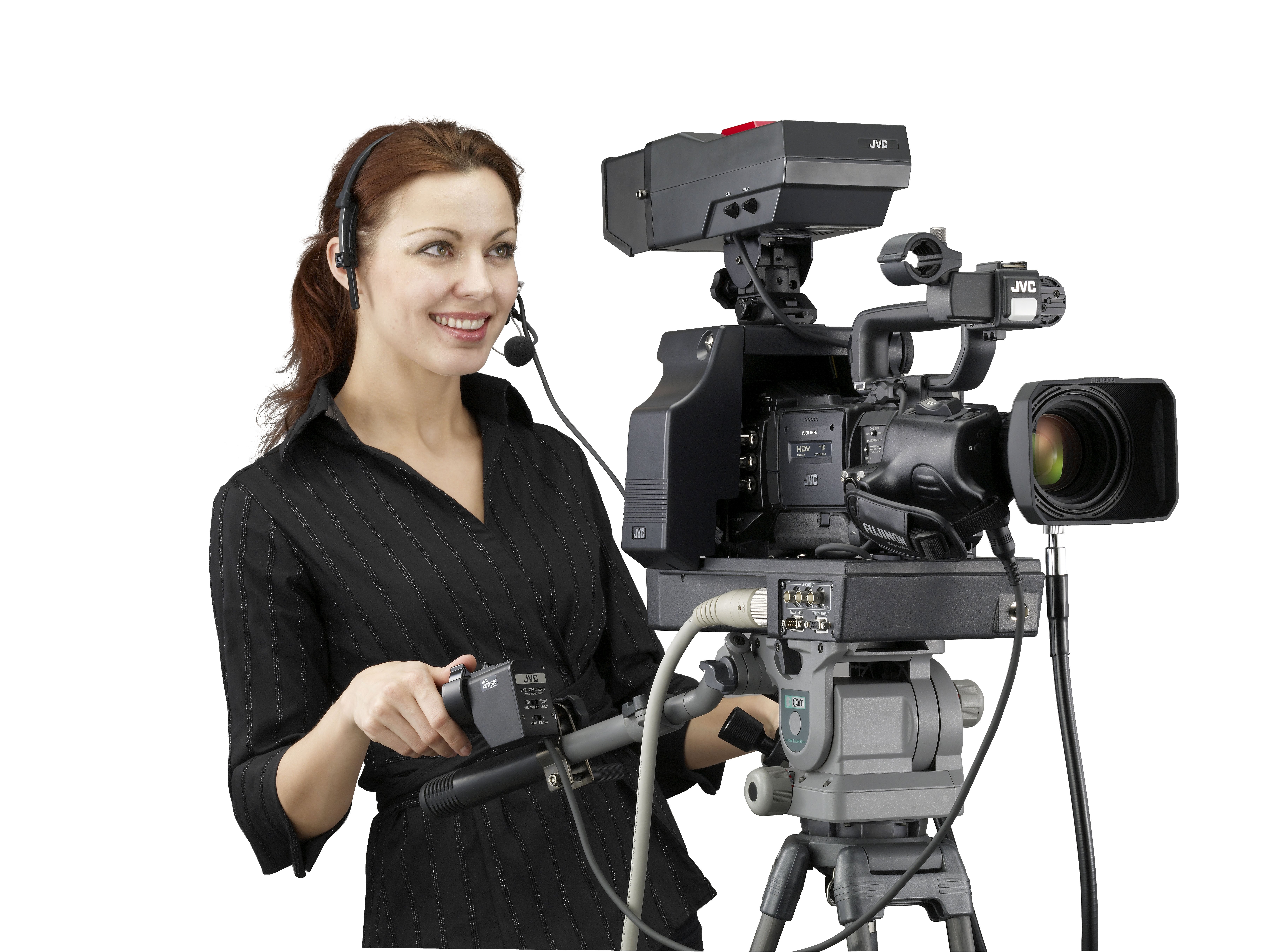 Camera operators are responsible for ensuring that everything that is being sent out on the television is adequately caught on camera. Without the camera operator, the programme would technically not be able to function.
Therefore there are many skills that come with being a camera operator.
- To be a camera operator, one must have a very sharp eye in order to spot the certain angles and shots that are needed whilst filming, and therefore physically maintaining these angles and shot types throughout the rest of the show. If the shots are incorrect or messy, this would make the programme aesthetically unpleasing and would just look messy, therefore having a sharp eye is a very important skill needed to be a camera operator.- Having a knowledge of specific camera lenses for different shots is also important, due to the fact that not all shots could use the same lenses, especially if some are faraway or even closer than others. If the wrong lens is used at the wrong time, especially for live shows, not only will it be difficult to change at the time but the audience at home misses out on a huge part of whatever they are watching.
- Sometimes, the programme may be unscripted meaning that the camera operator must be able to adequately film and know the shots from memory.
There are also many duties that the camera operator has to perform whilst working in television.
- Before filming even takes place, the camera operator meets up with the directors in order to discuss and select the frames and shots that they plan to use. - Camera operators are also in charge of filming certain shots at specific times, especially if the programme is being broadcast live. If the camera is out of shot or out of focus, it could spoil the whole programme and therefore loose ratings.
- They must have a steady hand as for when filming takes place, again, especially if it is being broadcast live. There have been a few incidents when in live shows, the camera had fallen over as the camera operator stumbled and therefore leaving the show looking untidy and unprofessional.
Case Study
In this Case Study, Brian explains the advantages and disadvantages of being a camera operator.
Advantages include:
- Shooting and filming in different locations.
- An insight in new information whilst working.
- Satisfaction when the frames are aesthetically pleasing.
Disadvantages include:
- Working in awful weather conditions.
- It's handheld most of the time.
- Caught in the traffic or any road problems.
- Having to wait around if it is an information based television show.
Sound Mixer / Audio Engineer
The sound mixer is completely in charge for the quality and main sound projected in a television show. In television, with many entertainment programmes, it is important that the levels of sound are acceptable, and more importantly, are clear. If not, the viewer looses out on most of the sound in the show, probably leading to mass amounts of complaints, not giving the show a good reputation.
Duties to perform whilst being a sound mixer/audio engineer includes...

- They must make sure that the sound is clear and not muffled or distorted in anyway unless for a specific purpose relating to the sound.
- They must be able to handle professional audio equipment whilst filming and is responsible for recording the sound needed whilst filming.
Skills needed to become a sound mixer includes...
- They must have a sharp ear for distinguishing when certain sound is unnecessarily higher than another. Without this, the whole programme could well and truly fail.- A sufficient amount of knowledge on sound equipment and sound in media.
- An acute sense of timing for when mixing the sound live, so that sounds don't overlap and become messy.
Case Study
Some of the disadvantages and disadvantages of being a sound mixer has been listen below, taken from the Case Study above.
Advantages
- Different experiences daily.
Disadvantages
- Dealing with the clients and the directors.
- Some of the equipment is difficult to handle.
Vision Mixer
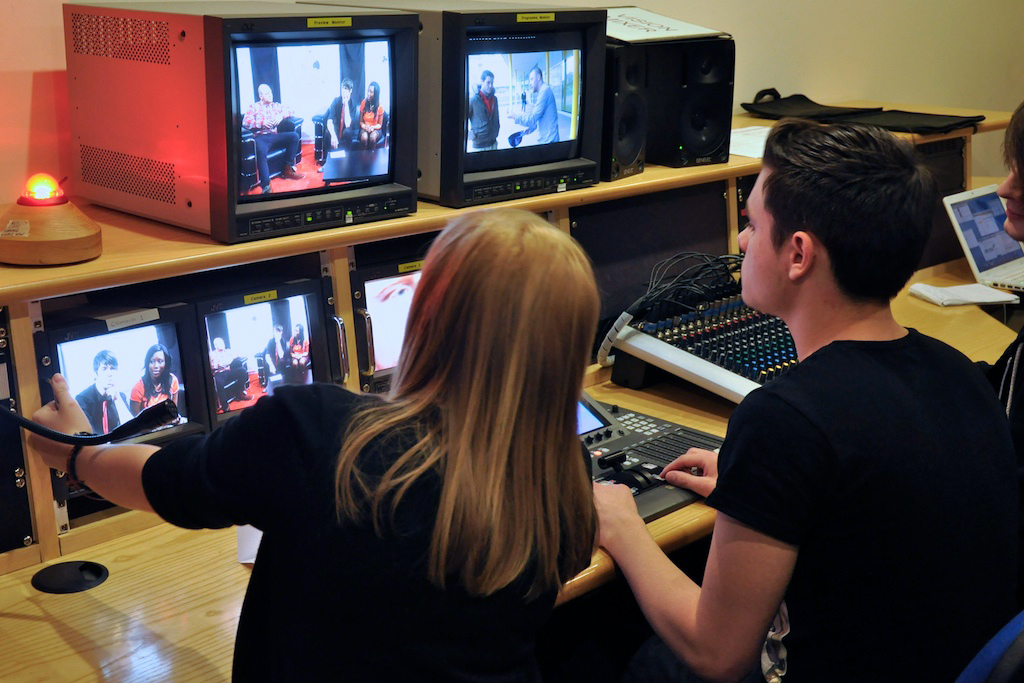
 |
| An example of when the vision mixer is needed - in the X Factor, before they performed live, the VT clip of them earlier in the that week. |
The duties that the vision mixer has to perform are
- Making sure that they cut and mix the videos together at the exact, precise time, in the exact way that they had rehearsed, if indeed they had rehearsed.
- Mixing the two video's in a clean and polished standard. If it is a serious show and the vision mixer decides to use the bouncing effect to transition from one video to another, this cold be seen as unreasonable or disrespectful.
- Consistently listen to the director, as they are the ones who know what they want out of the show and ultimately what they want it to look like. The vision mixers must never loose focus and always stay on top of what they have been told.
The skills involved, however, are...
- Being able to stay calm under pressure, especially in live shows. If anything were to go wrong, there would be no time to panic as the show only has a specific allocated time slot and cannot go over this.
- Have a firm mindset and be able to make decisions on the spot but yet be able to think about the outcome of those decisions at the same time. In a live show, nothing can be undone, therefore it is ideal that the visual mixer gets these decisions right the first time through - which means no hesitation.
- Having the capability to concentrate and not get distracted. Whatever the visual mixer decides on, the viewer sees. This means that there are no chances to temporarily loose yourself, even for a split second, as anything could go wrong and it would completely be their own fault, they would be held responsible.
Director (also known as a Television Director)
The director has one of the most important jobs in the whole of the crew. They are responsible for everything - whatever they say happens, absolutely must happen. There are no second thoughts when being a director, without them, the television show wouldn't run as everybody would have separate ideas and visions. They alert the crew on what they want doing and when they want it to happen, based on previous meetings discussing the show and what ultimately, whatever they believe the show should look like.
 There are many duties needed when being a director, however here I have listed just three of them.
- They are to begin the camera's rolling when they see fit, if not, running the risk of missing a cue.
- They must alert the crew in charge of mixing both audio and visual elements when they are supposed to do this, ideally at the time that they are scheduled to do it.
When being a director, it is equally important that you possess the following skills.
- Being quick. Live television shows and sporting events happen at a very quick pace, many shots are being used, therefore the Director must not only tell the cameramen which areas they should be cutting to, but also say it quickly so they have the time to do it.
- If things become too heactic, the Director is responsible for keeping order, therefore they must be strong minded and firm headed, otherwise running a risk of pure chaos.
- Being able to find flaws and pick apart any situation. Even though this sounds brutal, in rehearsals or even live, the Director must be able to point out where certain areas have gone wrong so that they can be fixed before the final take.
Set Designer
The set designer is responsible for placing where everything on the set goes. This is quite a long and laborious job in some conditions, especially if the set is quite large and there are many areas that need working on.

Many of the duties involved in being a set designer - however this is just a few of them.
- The set designer has to have a specifc eye for creativity and must be precise in measurements, etc.
- The set designer must be able to pick out the advantages and disadvantages from placing furniture in certain places on set. If something is to fall whilst filming, they are responsible
- To verbally communicate with the director and the presenter and the floor manager and to clearly explain the reasoning behind placing certain props in certain places.
However, alongside duties, there are also many skills needed to be a set designer.
- Thinking outside of the box and being open minded. There are so many chat shows and information shows that take place in a studio now, a risk is run of the sets becoming too generic or too boring. Therefore, it is important to have a creative mind and also not to be afraid to try something new.
- Practical skills in in drawing and designing models.
- A keen eye for detail.
- The set designer must be able to pick out the advantages and disadvantages from placing furniture in certain places on set. If something is to fall whilst filming, they are responsible
- To verbally communicate with the director and the presenter and the floor manager and to clearly explain the reasoning behind placing certain props in certain places.
However, alongside duties, there are also many skills needed to be a set designer.
- Thinking outside of the box and being open minded. There are so many chat shows and information shows that take place in a studio now, a risk is run of the sets becoming too generic or too boring. Therefore, it is important to have a creative mind and also not to be afraid to try something new.
- Practical skills in in drawing and designing models.
- A keen eye for detail.
Lighting Desk
Those that are in charge of the lighting desk are responsible for the lighting before and during filming. They must make sure that everything on set is visible and that the lighting levels are balanced, and they are especially important when there are moments in which a spotlight is needed or is aimed to be used. Duties included when in charge of the lighting desk include
- Pre-Planning the lighting. There is hardly any time to improvise with the lighting since one problem could potentially ruin the whole show, therefore the person managing the lighting desk must previously plan to avoid this.
- Actually assembling the equipment needed. The equipment would be delicate and probably difficult to assemble therefore only crew members that are high in the lighting desk knowledge should entitle themselves to work with this and they are responsible for the equipment.
- Doing test shots to ensure that the lighting is sufficient enough to film.
Some of the skills needed when in charge of lighting in production include
- Being able to work in a large team of people and yet still listen to the director. Overall, it's the director's vision, therefore even though there many be many people involved in filming, they will have to make sure that they carry out the task they were given.
- However they must also be able to fairly, calmly and firmly explain their own creative vision of the lighting. Even though the director can suggest a certain way that he wanted things to be filmed, they may not have the same knowledge.
- They must have clear eye for lighting, if something is too dim they must be able to see this without it coming to the point were somebody else has to point it out for them.
Floor Manager
Duties whilst becoming a floor manager inlcude
- Making sure that all of the equipment work before filming. If it doesn't, then obviously something would go wrong and therefore fail the entire show.
- Give cues to the floor staff and the presenters as soon as it is time for them to turn to a specific camera, also making sure that they can see them.
- Quickly deal with any technical difficulties being experienced on the show, which could be either frequent or rare, nevertheless the floor manager must be ready.
Skills involved in being a floor manager include the following.
- They must be able to work quickly and under pressure. Anything that goes wrong in whilst filming would mean that the floor manager would have to deal with, therefore there is no room to panic or run out of ideas if anything were to happen live.
- They must be good at multitasking. They do not just have one job, most of them have more than one and are responsible for more than one area in the production, so they must know how to do this.
- A good, precise sense of timing. Especially whilst giving cues to the talent or the presenter, if the floor manager makes a mistake or takes to long to cue to another camera, the presenter will still follow them, leading to them looking at the wrong camera at the wrong time, therefore giving the show an unprofessional look.
Graphics Designer
The graphics designers are responsible for any text or transitions that come on the screen during a show. This can be whilst filming live, or added in afterwards in the case of a pre-recorded show. It can even be changed after the broadcasting of a live show, an example being 'X Factor', where the numbers that are usually shown for each act are replaced with the words 'the lines are now closed', to prevent people from still calling in.Some duties involved whilst being a graphic designer include
- They must clearly communicate with the director, asking for any specific details that they must include. Sometimes, the graphics can be the most important part of the show, therefore they must be correct.
- They are responsible for placing different graphics on certain areas of the screen whilst filming.
- They are also asked to put some areas of information on the screen when they are asked to, such as texting numbers.
Some skills that are handed when a graphics designer
- Having a sufficient amount of knowledge in graphics and how to design under pressure.
- Finding practical solutions to problems. There are some situations that a graphic designer has to deal with that can only be solved if they think rationally.
- A wide creativity and imagination. Without this, the show could look rather bland and would not be aesthetically pleasing nor memorable.
VT Operator
The VT operator is responsible for inserting different clips and small videos into the main video rolling. Most of the time, they add the video and the video mixer then ensures that the colour and the balance is sufficient enough for this to be broadcast on television.Duties of being a VT Operator include
- They are responsible for cutting certain clips at specific times.
- They also prepare the VT's that are needed, lining them up and queuing them so that they are shown at the right times.
- They are responsible for ensuring that the director's vision has been fulfilled and that they do not cut too early or too late.
Skills of being a VT Operator include the following
- The VT Operator must have a sharp sense of hearing. As soon as the Director wants to cut to something, the VT Operator must automatically carry out this action.
- They must be able to work quickly and effectively under pressure. Without this, the whole show could crumble.
- Finally, they must have a sensible sense of timing, impeccable in fact. There is no space in live shows for them to run a VT late, especially in the news.
Presenter
The Presenter is responsible for showing and introducing the show. They are the entertainer in some cases, and the information-giver in other cases, such as news programmes. Duties of being a presenter include
- They must read off the auto-cue in many situations, with a clear voice.
- Sometimes they must write and memorize their scripts, rehearsing them also before the camera rolls.
- They must research the background and have a sufficient knowledge of what they are speaking about.
Skills of being a VT Operator include the following
- A clear voice. Without this, the viewer and audience would not be able to understand or comprehend what they are saying.
- An inviting persona. Even if this was something like the news, they would have to be somewhat comfortable with the camera in front of them, otherwise they could come across uncomfortable to the viewer, leading them to turn off.
- Being able to improvise in awkward situations, as they are the only people on the television that the viewer can see and therefore must also remain calm.
Tuesday, 22 April 2014
Multicamera: Practical & Aesthetics
Multicamera Formats: Practical & Aesthetics
Why is the Multimedia Camera Format used?
 |
| An example of when multimedia camera formats are needed - the same shot is being televised and somehow, the viewer still needs to be interested. |
Sport
Concert
 |
| The shot of the crowd reaction to the artist. |
At 0:18, there is a fade to the drummer of the band supporting the artist. This could only be achieved with a multicamera format and this, once again, sets the tone for the performance - however it is also aesthetically pleasing. The fading shot to the drummer sets a very swift and gentle tone to the performance. Also, the viewer has an advantage, as only they can see this in the live edit that they are watching, yet the audience would not have been able to see this. At 0:38, there is a slow pan from high in the air down to the artist, as soon as the beat of the song kicks in, therefore emphasizing the sound and the image together. At 0:51, there is a slow panning left shot of the audience and shows the atmosphere of the performance. At least nine of the people shown in this crowd had their phones out, filming Lorde, as the camera continues to pan, more people are shown with their electronic devices. It was quite a small stage and therefore quite a small audience, however alongside the mood of the song and the tone of the performance, it works well. The shot actually pans in time with the pace of the song, therefore allowing the heartfelt emotion through the lyrics and the pace of the song shown through it. At 1:57, there is another shot of the crowd, this time from the left angle of the stage and from Lorde's perspective. This time, the crowd's facial reactions are seen. Most of the audience are singing along, totally still as they watch her perform. The fact that they are singing along allows the viewer to believe that they are enjoying this performance, possibly encouraging the viewer to do the same. However the energy has clearly been lost in the audience, as the multicamera shots have proven. There are many shots within the video that suggest the mood is of stunned silence.
Public Events

Public events usually come with a large audience or crowd at the scene. Commonly, the public events are part of the royal family or anything linked with royal importance and these normally take more than two hours screening time and yet all of it is shown on the television,usually without adverts or any screen breaks. Obviously, with such long yet important events, the most important aspect is to maintain the viewer's interest. It is extremely easy in these situations for the viewer to turn off the programme due to the lack of excitement. Therefore multicamera production is used to maintain this. For example, the Royal Wedding in 2011 was said to be the biggest public event since the late Princess Diana's funeral. The ceremony and the services had been rumored to be three hours long. One single camera used to film this would neither be aesthetically pleasing nor practically possible, especially with the large scale of crowds at the scene of the event. However, one definite disadvantage to using multicamera formats for these events would be if one camera were to fail. There have been many incidents where somebody as cut to the wrong camera at the wrong time and sadly, this is being broadcast to millions of people. At such an important event such as this one, missing any moment would be seen as a tragedy and therefore would create many complaints. Such a big public event would mean many people coming out from all over the world at the same time to watch it, which means that many high angles or suspended cameras are needed for the screening. This is to: first of all, show the scale of the event and the publicity that it had gained, secondly, allow the viewer to get a better, more comfortable perspective. Automatically, in the video example above, at 0:06, there is a high angle sweeping shot of the abbey that the wedding was taking place in. The ceiling is particularly high, which one camera would not be able to show, however using multicamera production does allow the viewer to experience this themselves. This is also important because the Royal Wedding was a big event but also a very private one. Everybody had the chance to wait outside the church or in the streets to see the carriage go past however not everybody could enter the actual ceremony, only certain people on a guest list could have arrived. This meant that the rest of the world that was not in the church had to watch the ceremony televised on screens, therefore using multicamera formats was the only way they were able to see exactly what took place in the church. Therefore using the right format of cameras to show this was definitely essential. The whole church has a royal glow to it, shown from this angle. Also, from this angle, the viewer is able to see the beauty and the size of Kate Middleton's tail end of the dress, which from any other angle would probably be difficult to recognize the full scale of, therefore a high angle was definitely essential. This shot also moves alongside the pace of Kate walking down the aisle and the movement is so gentle that it flows nicely, looking aesthetically beautiful. The biggest and probably most beautiful shot in the whole of the broadcasting is the shot at 1:35, which is aesthetically amazing. Not only is the capacity of the cathedral shown but also all of the royal colours, particularly gold and red, shining from the high angle that it has been shown at. Even the people that were inside of the wedding itself would not have been able to get this view. Therefore, for the viewer, this highlights the importance. Practically, one camera would able to cover the wedding, yes. However it wouldn't be very aesthetically pleasing to the eye, since even though it was a beautiful moment and occasion, it would become boring. Therefore shots have been used such as mid shots and reaction shots of the guests at 2:32 and 2:43 to create a deeper variety of shots giving the viewer something different to look at.
 |
| The high angle shot of the cathedral, was beautiful, |
Game Shows
 |
| The cube appears to be larger than it probably is from this angle, creating mass amounts of tension. |
 |
| an example of when different cameras are used to play different tricks on the viewer, to make them believe something and then reveal that this was in fact an aesthetic illusion. |

Talent Shows
Chat Shows
Magazine Shows
Subscribe to:
Posts (Atom)